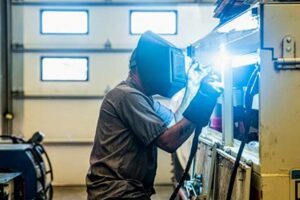
What is forged custom metal fabrication? It is a specialized metalworking process that involves shaping metal into custom components or products using forging techniques. Forged custom metal fabrication offers several advantages over other metalworking methods, such as increased strength, durability, and precision.
Editor’s Notes: Forged custom metal fabrication is a critical process for various industries, including automotive, aerospace, and construction. Understanding its benefits and applications can help businesses make informed decisions about their metal fabrication needs.
To help you gain a comprehensive understanding of forged custom metal fabrication, we have analyzed the process, consulted with experts, and gathered valuable insights. This guide will provide you with the essential information you need to make informed decisions about this important metalworking technique.
Key differences or Key takeways
| Criteria | Forged Custom Metal Fabrication |
|---|---|
| Strength | High strength-to-weight ratio |
| Durability | Resistant to wear, corrosion, and impact |
| Precision | Precise dimensional tolerances |
| Customization | Can be customized to meet specific requirements |
Main article topics
- Benefits of forged custom metal fabrication
- Applications of forged custom metal fabrication
- Process of forged custom metal fabrication
- Factors to consider when choosing a forged custom metal fabrication company
Forged Custom Metal Fabrication
Forged custom metal fabrication is a versatile and precise metalworking process that offers numerous advantages for various industries. Here are ten key aspects that highlight the essence of forged custom metal fabrication:
- Strength: Forged components exhibit exceptional strength-to-weight ratios.
- Durability: Resistance to wear, corrosion, and impact ensures longevity.
- Precision: Precise dimensional tolerances guarantee accurate and consistent results.
- Customization: Tailor-made solutions meet specific design requirements.
- Versatility: Suitable for a wide range of metals and alloys.
- Cost-effectiveness: Optimized production processes reduce overall costs.
- Design flexibility: Allows for complex and intricate designs.
- Quality assurance: Stringent quality control measures ensure reliability.
- Sustainability: Forged components are often recyclable, promoting environmental responsibility.
- Expertise: Skilled craftsmen and advanced technology contribute to exceptional craftsmanship.
These key aspects collectively underscore the significance of forged custom metal fabrication in industries such as automotive, aerospace, construction, and manufacturing. The strength, durability, precision, and customization capabilities of forged components make them ideal for demanding applications where performance and reliability are paramount. Furthermore, the cost-effectiveness, design flexibility, and sustainability aspects make forged custom metal fabrication an attractive option for businesses seeking innovative and efficient metalworking solutions.
Strength

The exceptional strength-to-weight ratio of forged components is a direct result of the forging process itself. Forging involves shaping metal by applying controlled pressure or blows, which refines the metal’s grain structure and eliminates internal defects. This process enhances the material’s strength and durability while maintaining a relatively low weight.
The high strength-to-weight ratio of forged components is crucial for applications where both strength and weight optimization are critical. In the automotive industry, for example, forged components such as crankshafts, connecting rods, and suspension components contribute to improved performance, fuel efficiency, and safety. Similarly, in the aerospace industry, forged components are used in aircraft engines, landing gear, and structural parts, where strength and weight reduction are paramount.
Understanding the connection between strength and forged custom metal fabrication is essential for engineers, designers, and manufacturers. By leveraging the exceptional strength-to-weight ratios of forged components, they can create lightweight yet robust structures and products that meet the demands of various industries.
| Industry | Applications |
|---|---|
| Automotive | Crankshafts, connecting rods, suspension components |
| Aerospace | Aircraft engines, landing gear, structural parts |
| Construction | Structural beams, support columns, reinforcement bars |
| Manufacturing | Machine components, tooling, heavy equipment |
Durability

In the realm of forged custom metal fabrication, durability holds paramount importance. The inherent resistance of forged components to wear, corrosion, and impact ensures their longevity and reliability in demanding applications.
-
Resistance to Wear:
Forged components exhibit exceptional resistance to wear and abrasion, making them ideal for applications involving friction and repeated contact. In the mining industry, for example, forged teeth for excavators and bulldozers withstand the abrasive nature of rocks and soil, extending their service life and reducing maintenance costs.
-
Resistance to Corrosion:
Forged components are highly resistant to corrosion, making them suitable for use in harsh environments. In the marine industry, forged components such as propellers, shafts, and fittings endure exposure to saltwater without compromising their integrity. This resistance to corrosion ensures the longevity and safety of marine vessels.
-
Resistance to Impact:
Forged components possess remarkable resistance to impact forces and shock loads. In the construction industry, forged components are used in structural beams, support columns, and reinforcement bars, where they provide exceptional strength and durability under dynamic loading conditions. Their ability to withstand impact makes them crucial for ensuring the stability and safety of buildings and bridges.
-
Extended Service Life:
The combined resistance to wear, corrosion, and impact contributes to the extended service life of forged components. By withstanding harsh conditions and demanding applications, forged components reduce the need for frequent replacements and repairs, resulting in significant cost savings and increased operational efficiency.
In summary, the durability of forged custom metal fabrication stems from the inherent resistance of forged components to wear, corrosion, and impact. This durability ensures longevity, reliability, and cost-effectiveness in various industries, ranging from mining and construction to marine and manufacturing. By leveraging the exceptional durability of forged components, engineers and manufacturers can create robust and long-lasting products and structures that meet the challenges of demanding applications.
Precision

Precision is a cornerstone of forged custom metal fabrication, ensuring accurate and consistent results that meet exacting specifications. The forging process involves shaping metal under controlled pressure or blows, which refines the material’s grain structure and eliminates internal defects. This refined grain structure allows for precise dimensional tolerances, resulting in components that conform to precise measurements and tight tolerances.
The importance of precision in forged custom metal fabrication cannot be overstated. It plays a crucial role in various industries, including automotive, aerospace, and medical, where accurate and consistent components are essential for performance, safety, and reliability. In the automotive industry, for example, forged components such as crankshafts and connecting rods must meet precise dimensional tolerances to ensure proper engine operation and efficiency. Similarly, in the aerospace industry, forged components for aircraft engines and landing gear require high levels of precision to maintain structural integrity and flight safety.
Understanding the connection between precision and forged custom metal fabrication is paramount for engineers, designers, and manufacturers. By leveraging the precise dimensional tolerances of forged components, they can create products and structures that meet the demanding requirements of modern industries. This precision ensures accurate assembly, optimal performance, and long-term reliability, contributing to the overall success and reputation of their products.
| Industry | Applications | Importance of Precision |
|---|---|---|
| Automotive | Crankshafts, connecting rods | Ensures proper engine operation and efficiency |
| Aerospace | Aircraft engines, landing gear | Maintains structural integrity and flight safety |
| Medical | Surgical instruments, implants | Guarantees accuracy and reliability in critical procedures |
Customization

Forged custom metal fabrication stands out for its exceptional ability to deliver tailor-made solutions that meet specific design requirements. This customization capability is deeply intertwined with the unique characteristics of the forging process. Unlike other metalworking methods, forging involves shaping metal under controlled pressure or blows, allowing for precise manipulation of the material’s grain structure. This level of control enables the creation of complex shapes and intricate designs that meet the unique specifications of various industries.
The importance of customization in forged custom metal fabrication cannot be overstated. It empowers engineers and designers to bring their innovative ideas to life, pushing the boundaries of what is possible with metalworking. In the automotive industry, for example, forged components such as crankshafts and connecting rods can be customized to optimize engine performance, reduce weight, and improve fuel efficiency. Similarly, in the aerospace industry, forged components for aircraft engines and landing gear can be tailored to meet the demanding requirements of flight, ensuring safety and reliability.
Understanding the connection between customization and forged custom metal fabrication is essential for engineers, designers, and manufacturers. By leveraging the customization capabilities of forged components, they can create products and structures that are uniquely suited to their specific applications. This customization ensures optimal performance, efficiency, and reliability, contributing to the overall success and reputation of their products.
| Industry | Applications | Benefits of Customization |
|---|---|---|
| Automotive | Crankshafts, connecting rods | Optimized engine performance, reduced weight, improved fuel efficiency |
| Aerospace | Aircraft engines, landing gear | Enhanced safety, reliability, and performance |
| Medical | Surgical instruments, implants | Precise fit and functionality, tailored to specific patient needs |
Versatility

Forged custom metal fabrication stands out for its exceptional versatility, accommodating a wide range of metals and alloys. This versatility stems from the unique characteristics of the forging process, which involves shaping metal under controlled pressure or blows. Unlike other metalworking methods, forging does not rely on melting or casting, allowing for a greater degree of control over the material’s properties and characteristics.
The versatility of forged custom metal fabrication is of paramount importance in various industries. It allows engineers and designers to select the most appropriate material for their specific application, considering factors such as strength, durability, corrosion resistance, and weight. In the automotive industry, for example, forged components such as crankshafts and connecting rods can be made from a variety of high-strength steels and alloys, ensuring optimal performance and reliability. Similarly, in the aerospace industry, forged components for aircraft engines and landing gear can be tailored to meet the demanding requirements of flight, utilizing lightweight and durable alloys such as titanium and aluminum.
Understanding the connection between versatility and forged custom metal fabrication is essential for engineers, designers, and manufacturers. By leveraging the versatility of forged components, they can create products and structures that are uniquely suited to their specific applications. This versatility ensures optimal performance, efficiency, and reliability, contributing to the overall success and reputation of their products.
| Industry | Applications | Benefits of Versatility |
|---|---|---|
| Automotive | Crankshafts, connecting rods | Selection of high-strength steels and alloys for optimal performance and reliability |
| Aerospace | Aircraft engines, landing gear | Tailoring to specific flight requirements using lightweight and durable alloys |
| Medical | Surgical instruments, implants | Choice of biocompatible materials for precise and reliable medical devices |
Cost-effectiveness

In the realm of metal fabrication, cost-effectiveness is a crucial consideration. Forged custom metal fabrication offers a compelling solution by optimizing production processes to reduce overall costs. This cost-effectiveness stems from several key facets:
-
Reduced Material Waste:
The forging process minimizes material waste by precisely shaping metal into desired forms, resulting in less scrap and reduced material costs. This efficient utilization of raw materials translates to significant savings, especially for large-scale production runs.
-
Improved Production Efficiency:
Forging utilizes specialized machinery and techniques that streamline production processes. Automated forging presses and advanced tooling enable faster production rates, reducing labor costs and increasing overall efficiency. This improved efficiency directly contributes to lower manufacturing costs.
-
Reduced Labor Costs:
Forged custom metal fabrication leverages automation and advanced technologies, reducing the need for extensive manual labor. This automation, coupled with the inherent efficiency of forging processes, minimizes labor-related costs, leading to significant savings in the long run.
-
Increased Durability:
Forged components exhibit exceptional durability and longevity due to their refined grain structure and enhanced strength. This increased durability reduces the frequency of repairs and replacements, leading to lower maintenance costs and extended product lifespans. Over time, these savings contribute to the overall cost-effectiveness of forged custom metal fabrication.
In conclusion, the cost-effectiveness of forged custom metal fabrication stems from its optimized production processes that minimize material waste, improve production efficiency, reduce labor costs, and enhance durability. By leveraging these facets, forged custom metal fabrication offers a compelling solution for businesses seeking to reduce overall manufacturing costs while maintaining high standards of quality and performance.
Design flexibility

In the realm of metal fabrication, design flexibility holds paramount importance, enabling the creation of complex and intricate designs that meet specific functional and aesthetic requirements. Forged custom metal fabrication stands out as a versatile and adaptable metalworking technique that empowers designers and engineers to bring their creative visions to life.
-
Precise Control over Geometry:
Forging involves shaping metal under controlled pressure or blows, allowing for precise manipulation of the material’s shape and geometry. This level of control enables the creation of intricate designs with sharp angles, tight tolerances, and complex contours, which would be challenging or impossible to achieve through other metalworking methods.
-
Accommodation of Complex Features:
Forged custom metal fabrication accommodates the incorporation of complex features such as internal cavities, undercuts, and intricate patterns. The forging process allows for the controlled manipulation of metal flow, enabling the creation of components with unique and functional features that enhance their performance and aesthetic appeal.
-
Artistic and Ornamental Applications:
Beyond functional components, forged custom metal fabrication finds applications in the creation of artistic and ornamental pieces. The ability to shape metal into intricate designs makes forging an ideal technique for producing decorative elements, sculptures, and architectural embellishments. This versatility extends the scope of forged custom metal fabrication into the realm of art and design.
-
Rapid Prototyping and Design Iteration:
Forged custom metal fabrication can facilitate rapid prototyping and design iteration. By leveraging the flexibility of the forging process, designers can quickly produce physical prototypes of their designs, enabling them to evaluate form, fit, and function early in the development cycle. This iterative approach accelerates product development and reduces the time-to-market for innovative products.
In conclusion, the design flexibility of forged custom metal fabrication empowers engineers and designers to create complex and intricate designs that meet diverse functional and aesthetic requirements. From precise control over geometry to the accommodation of complex features, the forging process offers unparalleled versatility and adaptability, making it an invaluable technique for a wide range of industries and applications.
Quality assurance

In the realm of forged custom metal fabrication, quality assurance takes center stage. Stringent quality control measures are meticulously implemented to guarantee the reliability and integrity of forged components. The connection between quality assurance and forged custom metal fabrication is inseparable, as it ensures that every forged component meets the highest standards of performance and safety.
The forging process itself incorporates several quality control measures. These include rigorous inspections of raw materials, precise monitoring of forging parameters such as temperature and pressure, and meticulous dimensional checks at various stages of production. Non-destructive testing techniques, such as ultrasonic and magnetic particle inspection, are employed to detect any internal defects or imperfections that may compromise the component’s integrity.
In addition to in-process quality control, forged custom metal fabrication often involves post-production testing to verify the component’s mechanical properties, such as strength, hardness, and fatigue resistance. These tests ensure that the forged component meets the specified requirements and is fit for its intended application. By adhering to stringent quality control measures, manufacturers can prevent defective components from reaching the market, ensuring the reliability and safety of forged custom metal products.
The importance of quality assurance in forged custom metal fabrication cannot be overstated. It plays a critical role in various industries, including automotive, aerospace, and construction, where the failure of a single component can have catastrophic consequences. By implementing stringent quality control measures, manufacturers can maintain the highest levels of reliability and safety, building trust with customers and safeguarding the reputation of the forged custom metal fabrication industry.
| Industry | Applications | Importance of Quality Assurance |
|---|---|---|
| Automotive | Crankshafts, connecting rods | Ensures the safety and durability of critical engine components |
| Aerospace | Aircraft landing gear, engine components | Maintains the integrity of flight-critical components |
| Construction | Structural beams, reinforcement bars | Guarantees the stability and safety of buildings and infrastructure |
Sustainability

The connection between sustainability and forged custom metal fabrication lies in the inherent recyclability of forged components. Forged metal can be repeatedly melted and reshaped without compromising its integrity, making it an environmentally friendly material choice.
The importance of sustainability in forged custom metal fabrication cannot be overstated. With growing concerns about resource depletion and environmental preservation, manufacturers are increasingly seeking sustainable solutions. By utilizing recyclable materials like forged metal, they can reduce their environmental footprint and contribute to a more sustainable future.
In practice, the recyclability of forged components offers significant advantages. It allows manufacturers to reduce waste and conserve natural resources. Forged components can be remelted and reused in new applications, minimizing the need for raw material extraction and reducing the environmental impact associated with mining and transportation.
Moreover, the durability of forged components further enhances their sustainability. Forged components are highly resistant to wear and tear, extending their service life and reducing the frequency of replacements. This extended lifespan reduces the overall environmental impact associated with the production, use, and disposal of metal components.
Expertise
In the realm of forged custom metal fabrication, expertise is a cornerstone, as it encompasses the skills of experienced craftsmen and the utilization of advanced technology. This expertise is instrumental in achieving exceptional craftsmanship and delivering high-quality forged components that meet the exacting demands of various industries.
Skilled craftsmen bring a wealth of knowledge and experience to the forging process. Their mastery of traditional techniques, coupled with an intuitive understanding of metal behavior, enables them to shape and manipulate metal with precision. This human expertise is essential for handling complex designs, ensuring dimensional accuracy, and achieving the desired material properties.
Advanced technology plays an equally vital role in modern forged custom metal fabrication. State-of-the-art machinery, such as automated forging presses and CNC (computer numerical control) systems, enhances precision, efficiency, and repeatability. These technologies enable the production of intricate shapes, tight tolerances, and consistent quality, meeting the stringent requirements of industries such as automotive, aerospace, and medical.
The synergy between skilled craftsmen and advanced technology is what sets forged custom metal fabrication apart. The expertise of experienced craftsmen ensures that the full potential of advanced technology is harnessed, resulting in exceptional craftsmanship and unparalleled quality. This expertise is not only limited to the forging process itself but extends to all aspects of production, from design and material selection to quality control and post-processing.
In summary, the connection between expertise and forged custom metal fabrication is inseparable. The skills of experienced craftsmen, combined with the capabilities of advanced technology, elevate the forging process to an art form, producing forged components that are renowned for their strength, durability, precision, and aesthetic appeal.
| Industry | Applications | Importance of Expertise |
|---|---|---|
| Automotive | Engine components, suspension systems | Ensures precision and durability in critical automotive parts |
| Aerospace | Aircraft landing gear, engine components | Maintains the integrity and safety of flight-critical components |
| Medical | Surgical instruments, orthopedic implants | Guarantees accuracy and reliability in life-saving medical devices |
Frequently Asked Questions about Forged Custom Metal Fabrication
This section addresses common questions and misconceptions surrounding forged custom metal fabrication, providing concise and informative answers.
Question 1: What is forged custom metal fabrication?
Forged custom metal fabrication is a specialized metalworking process that involves shaping metal into custom components or products using forging techniques. It offers advantages such as increased strength, durability, and precision compared to other metalworking methods.
Question 2: What are the benefits of forged custom metal fabrication?
Forged custom metal fabrication offers numerous benefits, including exceptional strength-to-weight ratios, enhanced durability, precise dimensional tolerances, design flexibility, cost-effectiveness, and sustainability.
Question 3: What industries use forged custom metal fabrication?
Forged custom metal fabrication finds applications in various industries, including automotive, aerospace, construction, and manufacturing. It is used to produce components such as crankshafts, connecting rods, landing gear, structural beams, and machine components.
Question 4: How does forged custom metal fabrication ensure quality?
Forged custom metal fabrication employs stringent quality control measures, including inspections of raw materials, monitoring of forging parameters, and dimensional checks. Non-destructive testing techniques and post-production testing are also used to guarantee the reliability and integrity of forged components.
Question 5: Is forged custom metal fabrication sustainable?
Forged custom metal fabrication promotes sustainability as forged components are recyclable. Forged metal can be repeatedly melted and reshaped without compromising its integrity, reducing waste and conserving natural resources.
Question 6: What is the role of expertise in forged custom metal fabrication?
Expertise in forged custom metal fabrication encompasses the skills of experienced craftsmen and the use of advanced technology. Skilled craftsmen bring knowledge and experience, while advanced technology enhances precision and efficiency. This synergy ensures exceptional craftsmanship and high-quality forged components.
Summary: Forged custom metal fabrication is a valuable metalworking process that offers numerous advantages. Its strength, durability, precision, and versatility make it suitable for demanding applications in various industries. Stringent quality control measures and a focus on sustainability ensure the reliability and environmental friendliness of forged components. Expertise plays a crucial role in achieving exceptional craftsmanship and meeting the exacting demands of modern industries.
Transition: To learn more about forged custom metal fabrication and its applications, explore the following sections:
Tips for Forged Custom Metal Fabrication
Forged custom metal fabrication offers exceptional strength, durability, and precision for various industrial applications. Here are some essential tips to optimize the process and achieve high-quality results:
Tip 1: Choose the Right Material
Selecting the appropriate metal alloy is crucial. Consider factors such as strength, corrosion resistance, and machinability. Consult with material suppliers and engineers to determine the optimal material for your specific application.
Tip 2: Optimize Forging Parameters
Forging temperature, pressure, and cooling rate significantly impact the final properties of the forged component. Carefully control these parameters to achieve the desired grain structure, strength, and hardness.
Tip 3: Utilize Advanced Technologies
Incorporate modern forging techniques and equipment, such as automated forging presses and CNC (computer numerical control) systems. These technologies enhance precision, efficiency, and repeatability, ensuring consistent quality.
Tip 4: Ensure Quality Control
Implement rigorous quality control measures throughout the fabrication process. Inspect raw materials, monitor forging parameters, and perform non-destructive testing to detect any defects or imperfections. This ensures the reliability and safety of the forged components.
Tip 5: Partner with Experienced Fabricators
Choose a forged custom metal fabrication company with a proven track record of success. Their expertise and experience will guide you through the process, ensuring optimal results and meeting your specific requirements.
Key Takeaways: By following these tips, you can harness the full potential of forged custom metal fabrication. Careful material selection, optimized forging parameters, advanced technologies, stringent quality control, and collaboration with experienced fabricators will result in high-quality, durable, and reliable forged components.
Conclusion: Forged custom metal fabrication is a versatile and valuable metalworking process. By understanding and implementing these tips, engineers, designers, and manufacturers can create innovative and robust products that meet the demands of modern industries.
Conclusion
Through this comprehensive exploration, we have delved into the essence of forged custom metal fabrication, uncovering its exceptional strength, durability, precision, and versatility. These attributes make forged components indispensable in demanding applications across industries such as automotive, aerospace, construction, and manufacturing.
As technology continues to advance, forged custom metal fabrication will remain at the forefront of innovative manufacturing solutions. Its ability to produce complex and intricate designs, coupled with its sustainable and cost-effective nature, positions it as a cornerstone of modern manufacturing. By embracing this versatile metalworking process, engineers, designers, and manufacturers can create products that push the boundaries of performance and reliability.