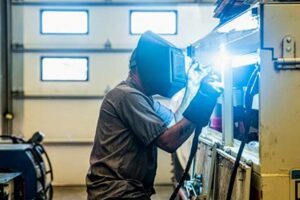
What exactly is metal custom fabrication? Metal custom fabrication is the process of creating metal structures and components to meet specific requirements. It involves cutting, bending, welding, and assembling metal materials to create customized products for various industries.
Editor’s Note: Understanding metal custom fabrication is crucial for businesses and individuals looking to create unique and tailored metal products.
Our team has conducted extensive research and analysis to present you with this comprehensive guide on metal custom fabrication. Whether you’re an engineer, designer, or business owner, this guide will provide valuable insights to help you make informed decisions regarding your metal fabrication needs.
Key Differences or Key Takeaways
| Custom Fabrication | Mass Production |
|---|---|
| One-of-a-kind products | Identical products in large quantities |
| Tailored to specific requirements | Limited customization options |
| Higher cost per unit | Lower cost per unit |
Main Article Topics
Metal Custom Fabrication
Metal custom fabrication encompasses a wide range of processes and techniques used to create unique and tailored metal products. Understanding the key aspects of metal custom fabrication is crucial for businesses and individuals seeking to leverage its capabilities. Here are nine essential aspects to consider:
- Customization: Tailored to specific requirements and designs.
- Precision: Accurate cutting, bending, and welding for high-quality products.
- Materials: Wide range of metals, including steel, aluminum, and stainless steel.
- Processes: Cutting, bending, welding, and assembling to create complex structures.
- Quality: Stringent quality control measures to ensure product reliability and durability.
- Cost-effectiveness: Balancing customization with cost optimization for various budgets.
- Expertise: Skilled professionals with in-depth knowledge and experience.
- Applications: Diverse industries, including construction, automotive, and manufacturing.
- Innovation: Continuous advancements in techniques and technologies for improved efficiency and capabilities.
These aspects are interconnected and contribute to the overall value proposition of metal custom fabrication. By understanding these key elements, businesses and individuals can make informed decisions regarding their metal fabrication needs and harness the benefits of customized, high-quality metal products.
Customization

In metal custom fabrication, customization is paramount. It allows for the creation of unique and tailored metal products that meet specific requirements and designs. This level of customization is achieved through close collaboration between the customer and the metal fabricator. The customer provides detailed specifications, including dimensions, materials, and finishes. The metal fabricator then uses its expertise and capabilities to transform these specifications into a tangible product.
The ability to customize metal products offers numerous advantages. Firstly, it ensures that the product meets the exact requirements of the customer. This is particularly important for specialized applications or when integrating the metal product into a larger system. Secondly, customization allows for the creation of unique designs that can enhance the aesthetic appeal or functionality of the product. This is especially valuable for architectural or decorative applications.
To illustrate the practical significance of customization, consider the example of a custom-fabricated metal staircase. A traditional staircase may be sufficient for basic functionality, but a custom-fabricated staircase can be designed to complement the architectural style of the building, incorporate intricate details, and even serve as a focal point. The ability to customize the staircase ensures that it seamlessly integrates into the overall design and enhances the aesthetic value of the space.
| Importance of Customization: | Applications: |
|---|---|
| Unique designs | Architectural structures |
| Precise fit and integration | Industrial machinery |
| Enhanced functionality | Medical equipment |
Understanding the connection between customization and metal custom fabrication empowers businesses and individuals to leverage this capability for their specific needs. By working closely with a skilled metal fabricator, they can transform their design concepts into high-quality, customized metal products that meet their exact requirements and exceed their expectations.
Precision

Precision is the cornerstone of metal custom fabrication, ensuring the creation of high-quality products that meet exact specifications and perform flawlessly. Achieving precision involves meticulous attention to detail throughout the fabrication process, from accurate cutting and bending to precise welding techniques.
-
Accurate Cutting:
Precise cutting is essential for creating metal components that fit together seamlessly and meet specific dimensions. Metal fabricators utilize advanced cutting technologies, such as laser cutting and waterjet cutting, to achieve precise cuts with minimal deviation. This ensures the integrity of the final product and eliminates the need for rework or adjustments. -
Precise Bending:
Bending metal requires careful calculation and specialized equipment to achieve the desired angles and shapes. Metal fabricators employ press brakes and other bending machines to precisely bend metal sheets and profiles, ensuring accurate alignment and the structural integrity of the final product. -
Precise Welding:
Welding is a critical process in metal fabrication, joining metal components together to form a strong and durable bond. Metal fabricators utilize various welding techniques, such as MIG welding and TIG welding, to achieve precise welds with minimal distortion or weakening of the metal. Skilled welders ensure that welds meet the highest quality standards, ensuring the longevity and reliability of the final product. -
Quality Assurance:
Throughout the fabrication process, metal fabricators implement rigorous quality assurance measures to ensure precision and accuracy. This includes regular inspections, dimensional checks, and non-destructive testing to verify that the final product meets the required specifications and standards. By adhering to strict quality control protocols, metal fabricators deliver products that are not only precise but also safe and reliable.
The connection between precision and metal custom fabrication is inseparable. By mastering the art of precise cutting, bending, and welding, metal fabricators create high-quality products that meet the exacting demands of various industries, including aerospace, medical, and construction. Precision is not merely a desirable trait but an essential requirement for metal custom fabrication, ensuring that products perform as intended and meet the highest standards of quality and reliability.
Materials
The selection of materials plays a pivotal role in metal custom fabrication, as different metals possess unique properties that cater to specific applications. Steel, aluminum, and stainless steel are three commonly used metals in custom fabrication, each offering distinct advantages and.
Steel: Known for its strength, durability, and affordability, steel is the most widely used metal in custom fabrication. Its high strength-to-weight ratio makes it suitable for load-bearing structures, while its versatility allows for various forming and welding techniques. Steel is commonly used in construction, automotive, and manufacturing industries.
Aluminum: Aluminum is a lightweight, corrosion-resistant metal that offers excellent strength and durability. Its low density makes it ideal for applications where weight reduction is crucial, such as aerospace and transportation. Aluminum is also resistant to corrosion, making it a suitable choice for marine and outdoor applications.
Stainless Steel: Stainless steel is an alloy of steel that contains chromium, making it highly resistant to corrosion and oxidation. Its durability and aesthetic appeal make it a popular choice for applications in food processing, medical equipment, and architectural structures. Stainless steel is also relatively easy to clean and maintain, contributing to its widespread use in hygienic environments.
The choice of material in metal custom fabrication depends on various factors, including the intended application, required strength, corrosion resistance, and budget. By understanding the properties and characteristics of different metals, fabricators can select the most appropriate material to meet the specific requirements of each project.
| Material | Properties | Applications |
|---|---|---|
| Steel | Strength, durability, affordability | Construction, automotive, manufacturing |
| Aluminum | Lightweight, corrosion resistance, strength | Aerospace, transportation, marine |
| Stainless Steel | Corrosion resistance, durability, aesthetic appeal | Food processing, medical equipment, architecture |
Processes

In metal custom fabrication, the processes of cutting, bending, welding, and assembling are intricately connected, forming the backbone of this specialized field. These processes, when combined with skilled craftsmanship and precision engineering, enable the creation of complex and durable metal structures that cater to diverse industries.
Cutting involves various techniques, such as laser cutting and waterjet cutting, to achieve precise shapes and dimensions. Bending utilizes specialized machinery like press brakes to shape metal sheets and profiles into desired angles and forms. Welding, a crucial process, joins metal components together using heat and filler material, ensuring structural integrity and strength. Finally, assembling brings all the fabricated components together, requiring careful planning and attention to detail to achieve a cohesive and functional structure.
The significance of these processes lies in their ability to transform raw metal materials into customized and highly functional products. For instance, in the construction industry, metal custom fabrication allows for the creation of intricate structural components, such as beams, columns, and trusses, which provide the framework for buildings and bridges. In the automotive sector, custom-fabricated metal parts are essential for vehicle frames, engine components, and exhaust systems, contributing to performance and durability.
Understanding the connection between these processes and metal custom fabrication empowers businesses and individuals to make informed decisions regarding their metal fabrication needs. By recognizing the capabilities and limitations of each process, they can effectively communicate their design concepts and expectations to metal fabricators. This understanding also enables them to appreciate the complexities involved in metal custom fabrication and the skills required to execute these processes with precision and efficiency.
| Process | Description | Importance |
|---|---|---|
| Cutting | Precisely shaping metal using laser or waterjet | Creates the desired shapes and dimensions |
| Bending | Forming metal into angles and shapes | Provides structural support and aesthetic appeal |
| Welding | Joining metal components using heat and filler | Ensures structural integrity and strength |
| Assembling | Putting fabricated components together | Completes the structure and ensures functionality |
Quality
In metal custom fabrication, stringent quality control measures are paramount to ensure the reliability and durability of fabricated products. Quality control encompasses a range of processes and procedures implemented throughout the fabrication process, from raw material inspection to final product testing.
The importance of quality control in metal custom fabrication cannot be overstated. It directly impacts the performance, safety, and longevity of the fabricated products. Stringent quality control measures minimize the risk of defects, ensuring that products meet the required specifications and standards. This is especially crucial in industries where metal components play a critical role, such as aerospace, medical, and construction.
To illustrate the practical significance of quality control in metal custom fabrication, consider the example of a custom-fabricated bridge. The bridge must be able to withstand heavy loads, endure environmental stresses, and provide safe passage for vehicles and pedestrians. Stringent quality control measures, including material testing, welding inspections, and load testing, are essential to ensure the bridge meets these requirements and performs reliably over its lifetime.
| Quality Control Measures | Importance |
|---|---|
| Raw material inspection | Ensures the quality of materials used |
| In-process inspections | Monitors quality throughout the fabrication process |
| Welding inspections | Verifies the integrity of welded joints |
| Final product testing | Assesses the overall performance and durability |
Understanding the connection between quality and metal custom fabrication empowers businesses and individuals to make informed decisions regarding their fabrication needs. By recognizing the importance of stringent quality control measures, they can prioritize working with reputable fabricators who adhere to high quality standards. This understanding also enables them to appreciate the value of quality over cost, ensuring that fabricated products meet their expectations and deliver long-term value.
Cost-effectiveness

In metal custom fabrication, cost-effectiveness plays a crucial role in ensuring that businesses and individuals can access high-quality fabricated products without exceeding their budgets. Cost-effectiveness involves balancing the level of customization with the overall cost of fabrication, considering factors such as material selection, production techniques, and finishing options.
The significance of cost-effectiveness in metal custom fabrication lies in its ability to make customized products accessible to a wider range of customers. By optimizing costs without compromising quality, fabricators can cater to the needs of businesses and individuals with varying budgets, enabling them to realize their design concepts without financial constraints.
To illustrate the practical significance of cost-effectiveness, consider a small business that requires a custom-fabricated metal display rack for their retail store. The business has a limited budget but desires a visually appealing and durable display solution. Through collaboration with a skilled fabricator, the business can explore cost-effective options such as utilizing standard metal profiles, optimizing the design for efficient material usage, and selecting a cost-effective finishing process. By balancing customization with cost optimization, the fabricator can deliver a customized display rack that meets the business’s functional and aesthetic requirements while adhering to their budget.
| Cost-Effective Strategies | Benefits |
|---|---|
| Material Selection | Selecting cost-effective materials without compromising durability |
| Design Optimization | Minimizing material waste and optimizing production processes |
| Finishing Techniques | Exploring cost-effective finishing options while maintaining desired aesthetics |
Understanding the connection between cost-effectiveness and metal custom fabrication empowers businesses and individuals to make informed decisions regarding their fabrication needs. By recognizing the importance of cost optimization, they can effectively communicate their budget constraints to fabricators and work collaboratively to develop cost-effective solutions that align with their project requirements.
Expertise

In the realm of metal custom fabrication, expertise reigns supreme. Skilled professionals, armed with in-depth knowledge and extensive experience, are the driving force behind the creation of exceptional metal products that meet precise specifications and exceed expectations.
Expertise encompasses a comprehensive understanding of metal properties, fabrication techniques, and industry standards. It involves mastering various processes such as cutting, bending, welding, and assembling, while staying abreast of technological advancements and best practices. Seasoned professionals possess the ability to analyze complex design requirements, identify potential challenges, and develop innovative solutions that align with the client’s vision.
The significance of expertise in metal custom fabrication cannot be overstated. It ensures that projects are executed with precision, efficiency, and adherence to the highest quality standards. Skilled professionals leverage their knowledge and experience to optimize material selection, minimize production time, and deliver cost-effective solutions without compromising structural integrity or aesthetic appeal.
To illustrate the practical significance of expertise in metal custom fabrication, consider the example of a custom-designed architectural facade. The facade’s intricate patterns and unique geometry require precise fabrication techniques and a deep understanding of metal behavior under various environmental conditions. Skilled professionals collaborate with architects and engineers to translate design concepts into tangible reality, ensuring that the facade not only meets aesthetic requirements but also withstands external forces and maintains its structural integrity over time.
| Expertise in Metal Custom Fabrication | Benefits |
|---|---|
| In-depth knowledge of metal properties and fabrication techniques | Optimizes material selection and production processes |
| Understanding of industry standards and best practices | Ensures compliance with regulatory requirements and quality expectations |
| Ability to analyze complex design requirements and develop innovative solutions | Transforms design concepts into practical and cost-effective products |
Understanding the connection between expertise and metal custom fabrication empowers businesses and individuals to make informed decisions regarding their fabrication needs. By recognizing the value of skilled professionals, they can effectively communicate their design ideas and expectations, confident that their projects will be executed with the highest level of precision, quality, and cost-effectiveness.
Applications

Metal custom fabrication finds its applications in a wide range of industries, including construction, automotive, and manufacturing. This versatility stems from the inherent properties of metals and the ability to shape and form them into complex structures. Metal custom fabrication plays a critical role in these industries, contributing to the development of innovative products and infrastructure.
In the construction industry, metal custom fabrication is essential for creating structural components such as beams, columns, and trusses. These components provide the framework for buildings and bridges, ensuring their stability and durability. Custom-fabricated metal stairs, railings, and facades not only enhance the aesthetic appeal of structures but also contribute to their functionality and safety.
Within the automotive industry, metal custom fabrication is utilized to produce vehicle frames, engine components, and exhaust systems. The ability to shape and weld metals allows manufacturers to create lightweight, high-performance parts that meet the demands of modern vehicles. Custom-fabricated metal components contribute to improved fuel efficiency, reduced emissions, and enhanced driving dynamics.
In manufacturing, metal custom fabrication is employed to create specialized machinery, production lines, and tooling. Custom-fabricated metal components enable manufacturers to optimize their production processes, increase efficiency, and improve product quality. Metal fabricators work closely with manufacturers to design and build custom solutions that meet specific production requirements.
The practical significance of understanding the connection between metal custom fabrication and its applications lies in the ability to leverage this knowledge for innovative problem-solving. By recognizing the potential of metal custom fabrication, businesses and individuals can explore new possibilities and create tailored solutions that meet their unique needs.
| Industry | Applications | Benefits |
|---|---|---|
| Construction | Structural components, stairs, railings, facades | Strength, durability, aesthetic appeal |
| Automotive | Vehicle frames, engine components, exhaust systems | Lightweight, high performance, efficiency |
| Manufacturing | Machinery, production lines, tooling | Optimization, efficiency, quality improvement |
Innovation
Innovation is the driving force behind advancements in metal custom fabrication techniques and technologies. Continuous research and development lead to improved efficiency and expanded capabilities, transforming the industry and enabling the creation of increasingly complex and sophisticated metal products.
One significant innovation in metal custom fabrication is the advent of computer-aided design (CAD) and computer-aided manufacturing (CAM) software. These technologies allow fabricators to design and simulate metal components digitally, optimizing their designs for strength, functionality, and cost-effectiveness. CAD/CAM also enables the integration of automated machinery, such as CNC (computer numerical control) machines, which precisely cut, bend, and weld metal components based on digital instructions.
Another innovative development is the emergence of new metalworking techniques, such as laser cutting and 3D printing. Laser cutting utilizes a high-powered laser to precisely cut intricate shapes and designs in metal sheets, while 3D printing builds metal components layer by layer, allowing for the creation of complex geometries and customized parts.
The practical significance of understanding the connection between innovation and metal custom fabrication lies in its potential to drive business growth and competitive advantage. By embracing innovative techniques and technologies, metal fabricators can increase their efficiency, reduce production costs, and expand their capabilities to meet evolving market demands.
For instance, a metal fabrication company that invests in CAD/CAM software can streamline its design and production processes, reducing lead times and improving product quality. This enables the company to take on more complex projects and cater to a wider range of customers.
Similarly, a fabricator that adopts laser cutting technology can offer its customers precision-cut components with intricate designs, opening up new opportunities in industries such as aerospace and medical equipment manufacturing.
| Innovation in Metal Custom Fabrication | Benefits |
|---|---|
| Computer-aided design (CAD) and computer-aided manufacturing (CAM) | Improved design accuracy, optimized production processes, automated machinery integration |
| Laser cutting | Precise cutting of intricate shapes, reduced material waste, increased production speed |
| 3D printing | Creation of complex geometries, customized parts, reduced tooling costs |
In conclusion, innovation is an essential component of metal custom fabrication, enabling continuous advancements in techniques and technologies that drive efficiency, expand capabilities, and create new possibilities in diverse industries.
Frequently Asked Questions about Metal Custom Fabrication
Metal custom fabrication is a versatile and complex process, and potential customers often have questions about its capabilities and applications.
Question 1: What is the difference between metal custom fabrication and mass production?
Answer: Metal custom fabrication involves creating unique and tailored metal products to meet specific requirements, while mass production focuses on producing large quantities of identical products.
Question 2: What metals are commonly used in custom fabrication?
Answer: Steel, aluminum, and stainless steel are the most commonly used metals due to their strength, durability, and versatility.
Question 3: What are the benefits of using metal custom fabrication?
Answer: Metal custom fabrication offers several benefits, including customization, precision, durability, and cost-effectiveness.
Question 4: What industries use metal custom fabrication?
Answer: Metal custom fabrication finds applications in various industries, including construction, automotive, manufacturing, and aerospace.
Question 5: How can I find a reputable metal fabrication company?
Answer: Look for companies with experience, expertise, and a proven track record of delivering high-quality products.
Question 6: What are the latest trends in metal custom fabrication?
Answer: Advancements in technology continue to drive innovation in metal custom fabrication, with techniques like laser cutting and 3D printing becoming increasingly popular.
Summary: Understanding the capabilities and applications of metal custom fabrication is crucial for businesses and individuals seeking tailored metal products. By addressing common questions, this FAQ section provides valuable insights to help make informed decisions about metal fabrication needs.
Transition: To delve deeper into the world of metal custom fabrication, explore our comprehensive guides and resources on specific aspects of the process.
Metal Custom Fabrication Tips
Metal custom fabrication offers a wide range of possibilities for creating unique and tailored metal products. Here are some valuable tips to consider:
Tip 1: Define Clear Specifications:
Clearly communicate your design requirements, including dimensions, materials, and finishes, to the metal fabricator. This ensures that the final product meets your exact specifications.
Tip 2: Choose the Right Material:
Select the most appropriate metal material based on the intended application, considering factors such as strength, durability, and corrosion resistance. Common options include steel, aluminum, and stainless steel.
Tip 3: Leverage Expertise:
Partner with an experienced and skilled metal fabricator who can provide valuable insights and ensure the highest quality of workmanship.
Tip 4: Optimize Design for Cost-Effectiveness:
Work closely with the fabricator to explore cost-effective design solutions without compromising quality or functionality.
Tip 5: Embrace Innovation:
Keep up with the latest advancements in metal fabrication techniques and technologies, such as laser cutting and 3D printing, to enhance efficiency and capabilities.
Summary:
By following these tips, you can effectively communicate your requirements, make informed decisions, and harness the full potential of metal custom fabrication to bring your design concepts to life.
Conclusion
Metal custom fabrication has emerged as a powerful tool for businesses and individuals seeking to create unique and tailored metal products. Throughout this exploration, we have delved into the key aspects of metal custom fabrication, from its versatility to its applications across diverse industries.
Understanding the processes, materials, and expertise involved in metal custom fabrication empowers decision-makers to leverage this technology effectively. By embracing innovation and partnering with skilled fabricators, it becomes possible to transform design concepts into tangible products that meet precise specifications and exceed expectations.
As technology continues to advance and new techniques emerge, the possibilities of metal custom fabrication are limitless. Embrace the power of customization, precision, and durability to bring your design visions to life and drive innovation in your industry.